English
 عربى
Industry News
Home / News / Industry News / Carbide Non-Slip Pin Selection for Reliable Grip and Precision Fixture Performance

2026-11-13
In automated machining and precision assembly, even a small amount of component movement can affect the quality of the finished product. Positioning pins need to maintain reliable contact while handling repeated pressure, friction, and vibration. When ordinary pins begin to wear or lose their grip, operators may face workpiece displacement, repeated adjustments, and inconsistent production results. A Carbide Non-Slip Pin helps address these challenges through its hard material structure and application-specific contact design, making it a useful component for industrial fixtures and precision tooling systems.
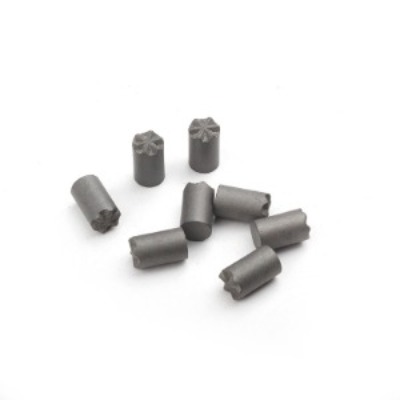
Repeated loading and unloading can gradually change the contact condition between a pin and the workpiece. Smooth or worn surfaces may provide insufficient resistance, especially when fixtures are exposed to vibration or frequent mechanical movement.
A non-slip design helps improve contact stability by providing suitable surface engagement. When combined with carbide material, it can support applications where both grip performance and wear resistance are important. Engineers should evaluate the actual contact conditions to ensure the pin works effectively with the surrounding fixture components.
Surface geometry directly affects how a pin interacts with the workpiece. Depending on the application, different surface profiles may be used to increase mechanical engagement and reduce unwanted movement.
When selecting a Carbide Non-Slip Pin, buyers should consider:
The objective is to achieve stable positioning without creating excessive contact pressure or damaging the mating component.
Cemented carbide is widely used in industrial tooling because of its hardness and resistance to abrasive wear. These characteristics make it suitable for pins that experience repeated contact during machining, positioning, and assembly.
However, carbide grades are not interchangeable in every application. Binder composition, operating loads, impact exposure, and working conditions can influence material selection. A suitable grade should balance wear resistance with the mechanical requirements of the fixture.
Even a well-made pin may perform poorly if its mounting conditions are unsuitable. Incorrect hole dimensions, misalignment, or excessive installation force can introduce stress and affect service performance.
Before installation, engineers should check the mounting hole, fitting tolerance, alignment, and contact position. Proper installation helps reduce unnecessary stress and supports consistent operation.
For industrial buyers, checking product consistency is particularly important when sourcing carbide pins in batches. Differences in diameter, surface finish, or geometry may create problems during fixture assembly.
As a carbide component manufacturer, we recommend evaluating the following items during quality inspection:
These checks help purchasing teams establish clear acceptance requirements before placing repeat orders.
Not every production line uses the same fixture structure. Some applications require specific pin lengths, diameters, surface patterns, or installation features. Providing technical drawings and application details allows manufacturers to assess machining requirements before production.
For customized Carbide Non-Slip Pin orders, clear communication about contact materials, operating loads, and working environments also helps avoid unsuitable specifications.
Pin wear, poor installation, and unsuitable surface design can all contribute to positioning problems. Addressing these factors during component selection and routine inspection helps reduce unexpected fixture adjustments. For manufacturers seeking stable contact and dependable wear performance, a properly specified Carbide Non-Slip Pin can support consistent positioning across repeated industrial operations.
 2th Zhengde Road, Furong Town Industrial Zone, Yueqing City, Wenzhou City, Zhejiang, China
 +86-18368755111 / +86-57762299177
 +86-57762298133
 2528647427@qq.com
Copyright © Zhejiang Yueqing Yueyu Alloy Material Co., Ltd. All Rights Reserved.
Wholesale Carbide Tips Manufacturer