English
 عربى
عربى
Industry News
Home / News / Industry News / Carbide Non-Slip Pin Supports Better Alignment Control in Advanced Tooling Applications

2026-09-11
As manufacturing processes become more focused on precision and repeatability, fixture components need to maintain stable performance under continuous operation. Small positioning parts can influence the accuracy of the entire production system, especially in CNC machining, tooling, and automated assembly environments. Carbide Non-Slip Pin is designed for applications where traditional positioning pins may face wear, slipping, or dimensional changes after repeated use. By combining carbide material advantages with functional surface design, this component helps engineers improve fixture reliability and production consistency.
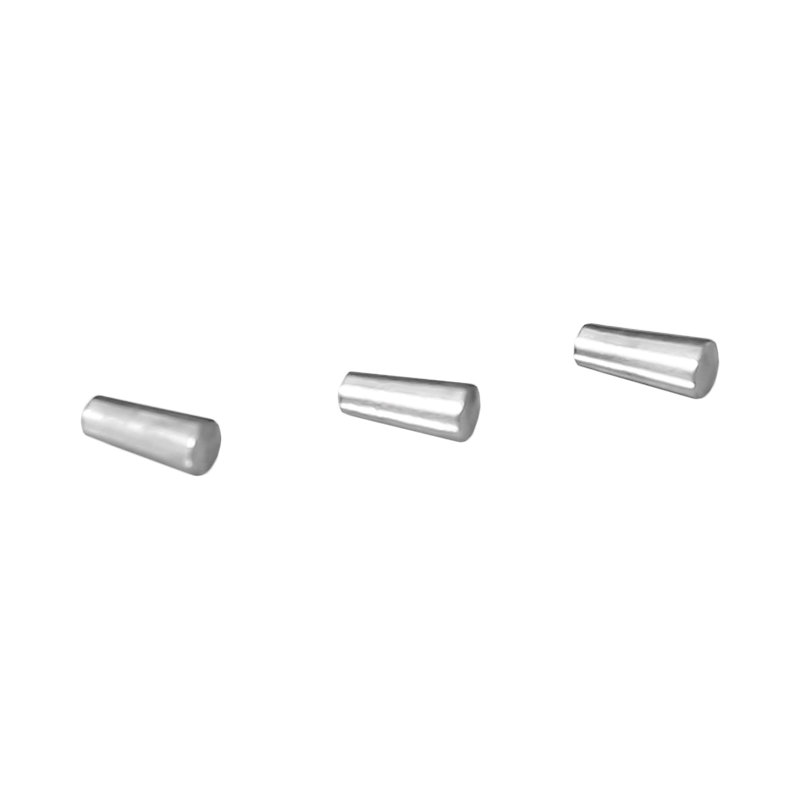
In high-volume manufacturing, fixtures experience frequent loading, unloading, and mechanical vibration. These repeated actions can gradually affect the contact performance of standard pins, resulting in loose positioning or increased adjustment requirements.
A carbide-based non-slip pin helps maintain stable engagement between fixture components. Its wear-resistant characteristics support longer-lasting dimensional control, making it suitable for production environments where positioning accuracy needs to remain consistent over many operating cycles.
Material selection is an important factor when designing industrial positioning components. Carbide is often selected for applications requiring strong wear resistance and stable geometry during repeated contact.
Compared with common metal pins, carbide solutions can provide:
For engineers, choosing the correct material based on operating conditions helps reduce unexpected downtime caused by worn fixture components.
The performance of a positioning pin depends not only on material but also on manufacturing quality. Diameter tolerance, surface finish, and geometric accuracy all influence how effectively the pin works within a fixture system.
During manufacturing, precise grinding and inspection processes help ensure that each Carbide Non-Slip Pin matches the required specifications. For customized applications, factors such as installation method, fixture structure, and working environment should be considered before production.
With the growth of automated manufacturing, stable positioning solutions are increasingly important across different industries. Carbide pins are commonly applied in tooling systems where repeated alignment and wear resistance are required.
Typical applications include:
These applications rely on accurate positioning to maintain smooth production processes and reduce manual adjustments.
When sourcing carbide positioning components, overseas buyers usually consider technical compatibility, customization capability, and manufacturing experience.
Before placing an order, engineers should confirm:
Providing detailed application information allows manufacturers to recommend a more suitable solution instead of a general-purpose component.
Different tooling systems often require different pin sizes, shapes, and surface structures. A flexible manufacturing process enables suppliers to support customized orders based on drawings, samples, or specific production needs.
As a manufacturer, we focus on producing Carbide Non-Slip Pin solutions that match customer application requirements. Through careful material selection, precision machining, and quality inspection, customized carbide components can help improve fixture stability and support reliable industrial operations.
For companies seeking durable positioning solutions, selecting the appropriate Carbide Non-Slip Pin can help maintain alignment accuracy, reduce wear-related issues, and improve the long-term performance of manufacturing fixtures.
 2th Zhengde Road, Furong Town Industrial Zone, Yueqing City, Wenzhou City, Zhejiang, China
 +86-18368755111 / +86-57762299177
 +86-57762298133
 2528647427@qq.com
Copyright © Zhejiang Yueqing Yueyu Alloy Material Co., Ltd. All Rights Reserved.
Wholesale Carbide Tips Manufacturer