English
 عربى
عربى
Industry News
Home / News / Industry News / Carbide Non-Slip Pin Helps Manufacturers Improve Fixture Accuracy and Maintenance Efficiency

2026-09-25
In precision manufacturing, fixture stability is closely connected with product quality and production efficiency. As machining processes become more automated, manufacturers need components that can maintain accurate positioning under repeated operation. Wear, vibration, and small alignment changes in fixtures may gradually affect processing results. Carbide Non-Slip Pin is developed for applications that require stable positioning, strong wear resistance, and reliable contact performance. For engineers and purchasing teams, choosing suitable carbide positioning components can help improve fixture reliability and reduce maintenance concerns.
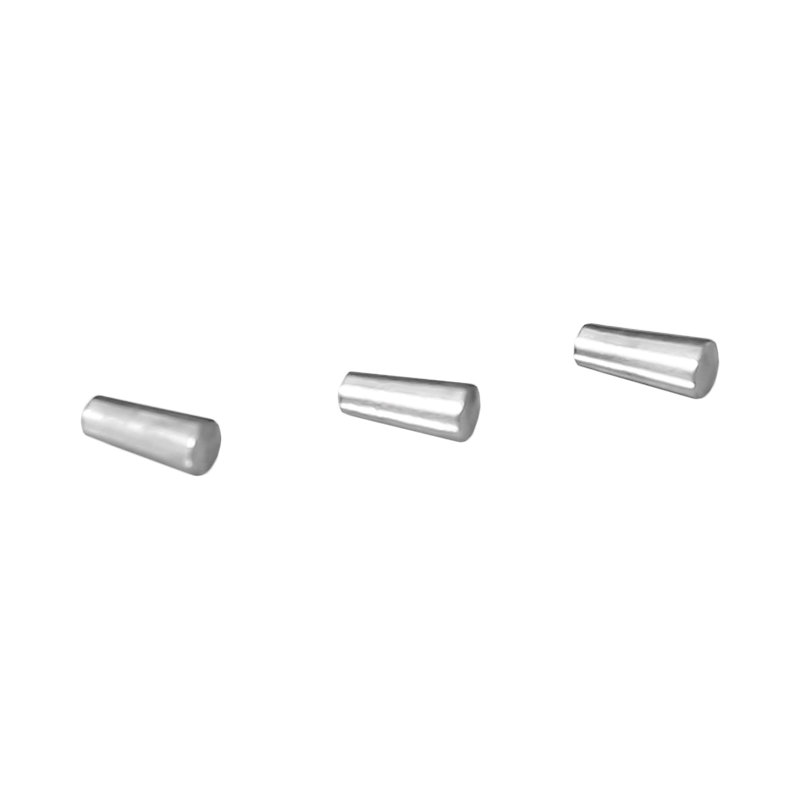
Fixtures used in CNC machining, tooling, and assembly lines often experience repeated loading and unloading. Over time, continuous friction and mechanical force may reduce the accuracy of conventional positioning parts.
A non-slip pin helps increase contact stability between connected components. By maintaining a secure position during operation, it supports more consistent fixture performance and reduces the possibility of movement caused by vibration or external force. This makes it suitable for production environments where repeatability is important.
The working environment of industrial pins can include frequent contact, pressure changes, and abrasive conditions. Material selection therefore plays an important role in component performance.
Carbide is widely used in demanding industrial applications because of its hardness and resistance to surface wear. Compared with standard materials, carbide components can better maintain their original dimensions during repeated use, helping fixtures continue operating with stable positioning accuracy.
For manufacturers selecting carbide pins, key considerations include:
These factors help ensure the component matches the actual application.
Modern tooling systems require components with consistent dimensions and reliable fitting accuracy. Even minor changes in a positioning element may influence fixture alignment and machining results.
During the manufacturing process, attention to diameter control, surface quality, and geometric accuracy helps improve the performance of a Carbide Non-Slip Pin. For customized applications, manufacturers usually evaluate the fixture structure and operating conditions before confirming the final design.
Carbide non-slip pins are applied in various industries where accurate positioning and repeated operation are required. Common application areas include:
These applications require components that can maintain performance throughout continuous production cycles.
For global procurement teams, product selection involves more than checking dimensions and price. Engineers often consider supplier capability, customization options, and quality consistency.
Before purchasing, buyers should confirm:
Clear technical communication helps manufacturers provide a more suitable solution for each project.
Different industries use different fixture structures, meaning standard components may not always meet specific requirements. Custom production allows engineers to adjust dimensions, surface structures, and fitting methods according to actual equipment needs.
As a manufacturer, we focus on developing Carbide Non-Slip Pin solutions for precision tooling and industrial applications. Through controlled machining processes and careful quality inspection, customized carbide components can support stable positioning and dependable production performance.
With increasing demand for accurate and efficient manufacturing, reliable fixture components have become an important part of production planning. Selecting the right Carbide Non-Slip Pin can help companies maintain alignment accuracy, improve fixture durability, and support smoother industrial operations.
 2th Zhengde Road, Furong Town Industrial Zone, Yueqing City, Wenzhou City, Zhejiang, China
 +86-18368755111 / +86-57762299177
 +86-57762298133
 2528647427@qq.com
Copyright © Zhejiang Yueqing Yueyu Alloy Material Co., Ltd. All Rights Reserved.
Wholesale Carbide Tips Manufacturer