English
 عربى
Industry News
Home / News / Industry News / Carbide Non-Slip Pin Wear Control for Demanding Industrial Applications

2026-11-23
In precision tooling, positioning problems do not always come from complex equipment failures. Sometimes, a worn contact pin or an unstable fixture connection is enough to interrupt normal production. Components exposed to repeated friction, pressure, and vibration need suitable material properties and surface designs to maintain reliable performance. A Carbide Non-Slip Pin is designed for applications where contact stability and resistance to surface wear are important. For tooling engineers and industrial buyers, understanding the factors behind pin wear can help improve component selection and reduce avoidable maintenance.
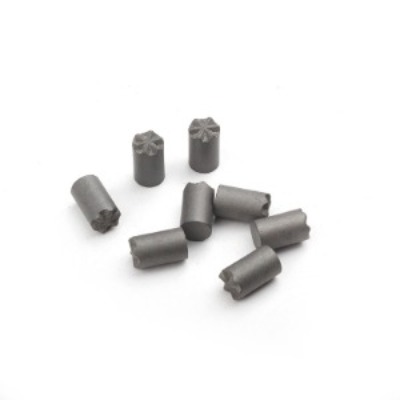
Pin wear can develop gradually during repeated production cycles. Changes in surface texture, visible scratches, edge damage, or loose fitting may indicate that a positioning component needs inspection.
These issues can affect workpiece alignment and make fixture performance less predictable. Instead of waiting for noticeable positioning errors, maintenance teams should include contact pins in routine equipment inspections.
Checking the pin surface and measuring critical dimensions can help identify wear before it creates further problems.
Cemented carbide is commonly selected for industrial components that experience continuous mechanical contact. Its high hardness and wear resistance help protect working surfaces against gradual material loss.
For non-slip pin applications, these properties can support consistent contact geometry over repeated operations. However, material selection should also account for impact exposure, mechanical loading, and the characteristics of the mating surface.
A suitable carbide grade helps balance wear resistance with the requirements of the actual working environment.
A pin's surface structure affects how it engages with the workpiece. Different non-slip patterns may be appropriate for different materials and fixture arrangements.
Before selecting a Carbide Non-Slip Pin, engineers should consider:
Evaluating these factors helps prevent unsuitable surface designs from affecting production quality.
Carbide components offer strong wear resistance, but their hardness does not make them immune to mechanical damage. Excessive installation force, misaligned mounting holes, and uneven support can create unnecessary stress.
Installation should follow the specified fitting dimensions and alignment requirements. Engineers should also avoid using unsuitable tools that may cause edge chipping or surface damage.
Proper mounting is particularly important when carbide pins are integrated into compact fixtures or frequently replaced tooling assemblies.
For industrial buyers, product consistency is just as important as the material itself. Differences in pin diameter, length, grinding quality, or surface geometry may affect compatibility with existing equipment.
As a carbide component manufacturer, we focus on material selection, machining accuracy, surface finishing, and dimensional inspection. Technical drawings and application requirements help establish suitable manufacturing specifications for customized orders.
Buyers should confirm critical tolerances and inspection requirements before bulk production to reduce potential fitting issues.
Standard pin dimensions may not meet every tooling requirement. Some applications need specific contact profiles, non-standard diameters, or customized lengths to fit existing equipment.
When requesting a customized Carbide Non-Slip Pin, buyers should provide drawings, installation details, workpiece materials, and operating conditions. These details allow the manufacturing team to evaluate the design and machining requirements more effectively.
Preventing premature wear requires more than choosing a hard material. Surface geometry, installation accuracy, operating conditions, and regular inspection all contribute to component performance. For industrial applications experiencing repeated contact or positioning instability, a properly designed Carbide Non-Slip Pin offers a practical approach to improving fixture reliability and maintaining consistent production conditions.
 2th Zhengde Road, Furong Town Industrial Zone, Yueqing City, Wenzhou City, Zhejiang, China
 +86-18368755111 / +86-57762299177
 +86-57762298133
 2528647427@qq.com
Copyright © Zhejiang Yueqing Yueyu Alloy Material Co., Ltd. All Rights Reserved.
Wholesale Carbide Tips Manufacturer