English
 عربى
عربى
Industry News

2026-06-05
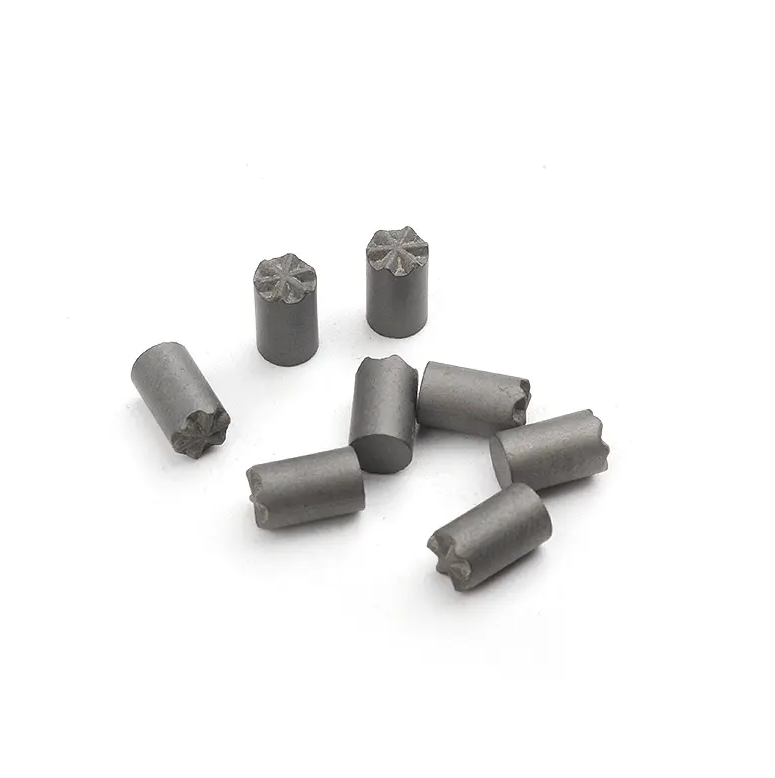
In modern manufacturing environments, fixture accuracy plays a significant role in maintaining consistent production quality. Whether machining complex components, assembling precision parts, or performing automated operations, stable positioning systems help support repeatable results. Carbide Non-Slip Pin solutions have become increasingly relevant in fixture design due to their durability and dimensional consistency. At the same time, an Indexable Insert Factory often operates under similar precision requirements, where reliable positioning and alignment contribute to efficient cutting tool production.
The Importance of Fixture Stability
Fixtures are designed to hold workpieces securely during manufacturing processes. Any movement, vibration, or positioning deviation may influence machining accuracy and part consistency. As production systems become more automated, the demand for dependable fixture components continues to grow.
Stable fixture systems help manufacturers:
Maintain repeatable positioning
Support product consistency
Reduce interruptions caused by alignment issues
Improve workflow efficiency in production environments
Among various fixture components, locating pins play a direct role in determining positioning accuracy. Their performance can affect the stability of the entire fixture assembly.
Why Carbide Materials Are Used in Positioning Components
Traditional locating pins made from standard steel may experience wear after extended use. Repeated contact, friction, and pressure can gradually affect dimensional accuracy.
A Carbide Non-Slip Pin offers characteristics that make it suitable for demanding industrial applications:
High Hardness
Carbide materials provide strong resistance to surface wear. This characteristic helps maintain the original dimensions of the pin during repeated positioning cycles.
Dimensional Consistency
Because carbide resists deformation under working conditions, the pin can continue supporting accurate positioning over long production periods.
Surface Stability
A stable surface condition helps reduce the likelihood of unwanted movement between mating components, supporting fixture reliability.
These features make carbide pins suitable for applications where positioning accuracy remains a key requirement.
Precision Design Considerations
The effectiveness of a locating pin depends not only on material selection but also on design and manufacturing quality.
Tight Tolerance Control
Precision fixtures require components manufactured within carefully controlled tolerances. Even small dimensional variations can influence assembly accuracy.
Surface Finish Requirements
Surface quality affects how the pin interacts with workpieces and fixture components. Consistent finishing processes help support smooth engagement and positioning.
Geometric Accuracy
Roundness, straightness, and concentricity contribute to proper alignment. Precision manufacturing methods are often applied to maintain these characteristics.
When these factors are combined, locating pins can support repeatable fixture performance across different production environments.
Applications Across Manufacturing Industries
A Carbide Non-Slip Pin can be found in many industrial sectors where accurate positioning is required.
CNC Machining Fixtures
Machining operations rely on secure workpiece positioning to maintain dimensional accuracy. Carbide pins help fixtures maintain alignment through repeated production cycles.
Welding Jigs
Welding processes may expose fixtures to heat and mechanical stress. Durable locating components support consistent positioning during assembly operations.
Stamping and Forming Tools
Repeated contact between tooling components can accelerate wear. Carbide locating pins help maintain alignment during ongoing production.
Automated Assembly Equipment
Automation systems depend on repeatable movement and positioning. Reliable locating elements support efficient operation and product consistency.
Connections Between Fixture Precision and Tool Manufacturing
An Indexable Insert Factory also relies heavily on precise positioning throughout its production processes. Insert manufacturing often involves multiple grinding, pressing, coating, and inspection stages. Each process benefits from accurate alignment systems.
Fixture stability contributes to:
Consistent insert geometry
Reliable production workflows
Accurate tool dimensions
Improved process control
As a result, precision positioning solutions play an important role not only in machining applications but also in cutting tool manufacturing environments.
Supporting Long-Term Production Reliability
Manufacturers frequently evaluate components based on their ability to perform consistently over time. Locating pins that resist wear and maintain dimensional accuracy can support predictable production outcomes.
By combining durable carbide materials with precision manufacturing techniques, fixture designers can create positioning systems that remain dependable under demanding operating conditions. The relationship between fixture stability and production consistency continues to make precision locating solutions an important consideration across modern manufacturing sectors.
 2th Zhengde Road, Furong Town Industrial Zone, Yueqing City, Wenzhou City, Zhejiang, China
 +86-18368755111 / +86-57762299177
 +86-57762298133
 2528647427@qq.com
Copyright © Zhejiang Yueqing Yueyu Alloy Material Co., Ltd. All Rights Reserved.
Wholesale Carbide Tips Manufacturer